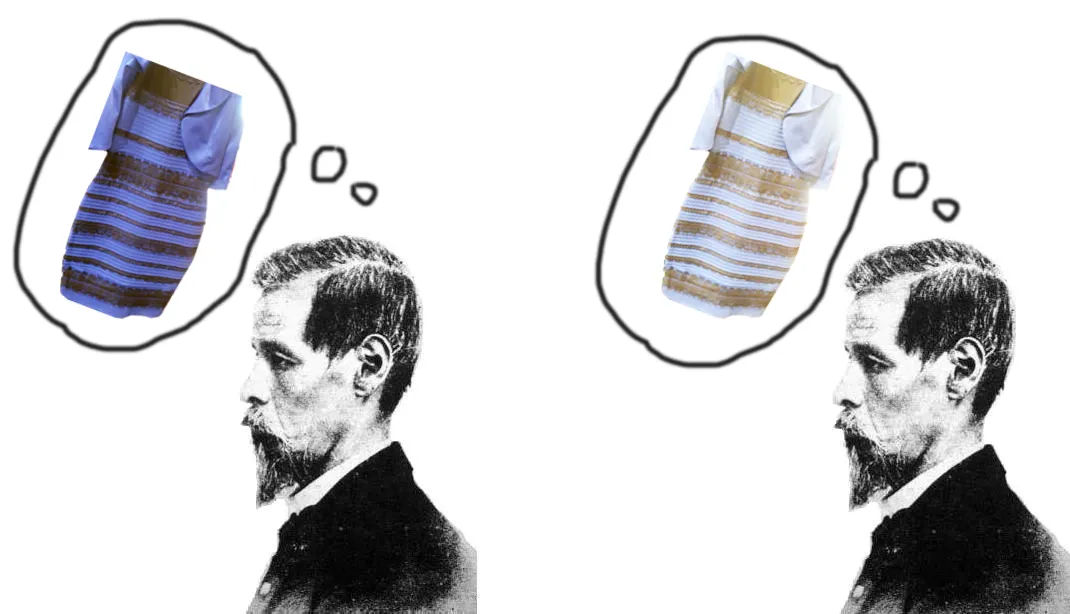
Trying to explain the color blue to someone who’s been blind since birth is pretty hard. Like describing the blueness itself; the specific incommunicable experience of blue.
I think you can’t. Not because the words don’t exist, but because words were never designed to carry qualia, or raw feels of experience. Put simply, It’s things we are — like pain, the redness of red, or how hot coffee tastes when it’s cold out.
This brings me to a pretty intimate problem in philosophy: consciousness isn’t just about processing information, it’s about there being “something it’s like” to process it. And that “something” has to be different for everyone, because we’re all unique. We’ve just learned to map our private experiences, qualia, onto public words so that our behaviors match perfectly (e.g. stopping at the same traffic lights).
But what makes this hard is that it’s not testable. No brain scan can reveal what redness may feel like to you. It could indicate what specific regions of your brain may be activated when seeing something red, which can be different from mine, but the inherent qualia cannot be identified1.
Understanding, or the feeling of almost remembering something are qualia too. Take for example mathematical beauty that so many mathematicians describe. It isn’t just metaphorical; they experience elegance in equations the way I may experience beauty in sunsets. A chess GM seeing a brilliant move feels something specific, irreducible, incommunicable to non-players. Although we may think it’s just a skill issue.
This makes me think expertise isn’t just knowing more but also feeling more; every skill or concept you develop adds new qualia to your already existing library. Your entire life is made of qualia, with every memory being a stored sensation that your brain traverses. Kind of like how an LLM would a knowledge graph
Quantum of Experience
Is there a smallest possible quale? A physical atomic unit of experience (matter) that can’t be subdivided? Or is consciousness infinitely divisible?
Giulio Tononi’s Integrated Information Theory (IIT) proposes consciousness comes in discrete units corresponding to “complexes” of integrated information (Φ). Each complex generates a specific quality of experience, or a quale-space. So that means there’s a minimum Φ for experience.
And also, if there are acually atomic qualia (indivisible units of experience), then consciousness must be digital and not analog. But if our reality just consists of micro-experiences, how do they combine into a macro-experience? This is what William James questioned.
Here’s the real question: why should there be something it’s like to be anything? Why should matter arranged in brain-patterns produce inner experience? Why isn’t the universe just complexity without experience, all function and no feeling? Maybe qualia are what matter IS, not what it does. Maybe every electron has a tiny quale of existence, and consciousness is what happens when enough micro-experiences bind together. The alternative, that feeling emerges from non-feeling, is just as weird.
Or maybe qualia are fundamental features of reality, like charge or mass. The universe is made of particles and the experiences they can generate.
I don’t know.
Footnotes
-
So when we say “I know how you feel,” we really don’t. I may now how I feel when similar things happen, but your grief is nothing like mine. We use the same words to point to incomparable experiences. ↩